
What Makes a Small Group Cocktail Experience

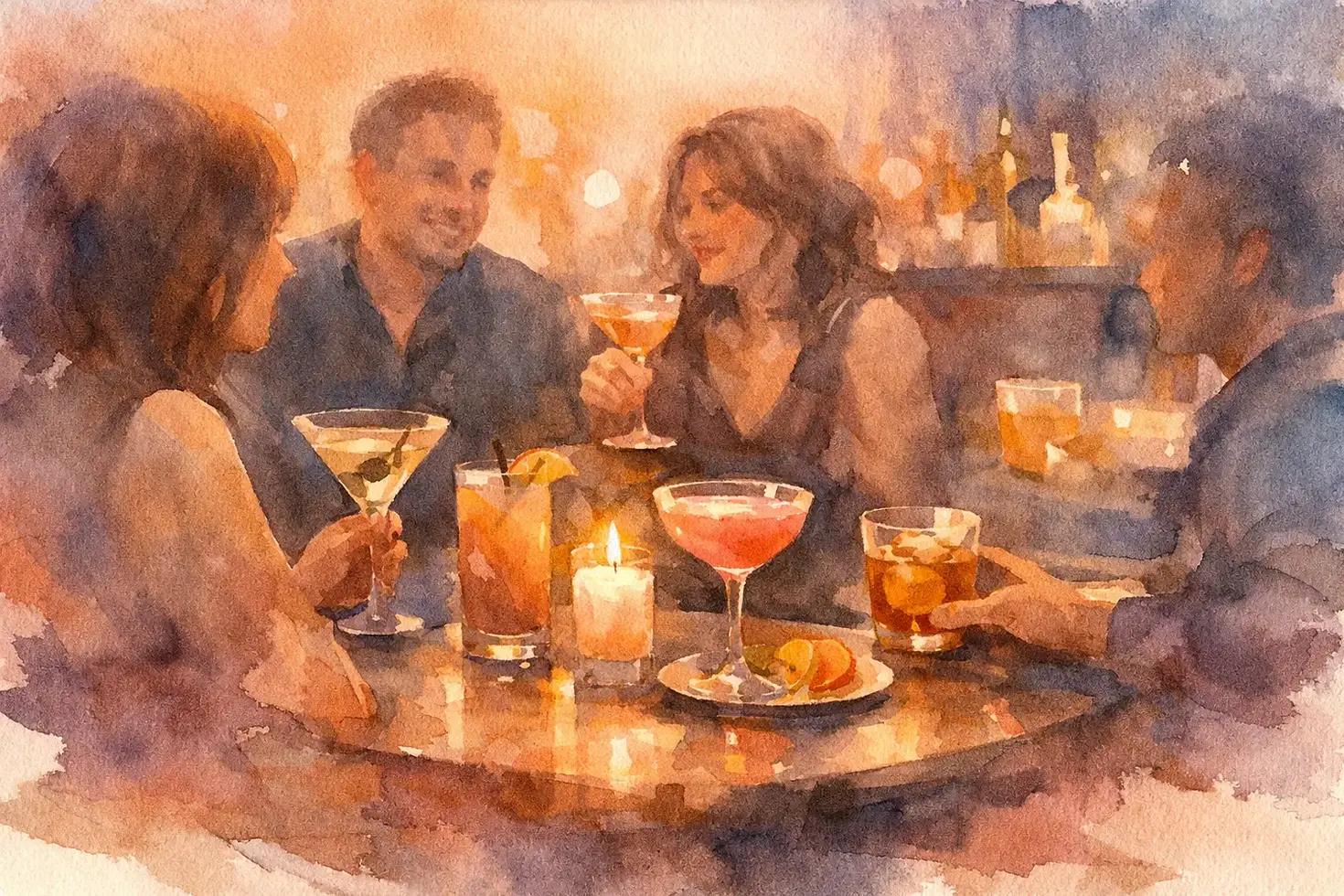
Four people around a low table can change the entire mood of a night. The music does not need to compete with a crowd. The bartender does not need to rush. A small group cocktail experience gives everyone more room to notice what they are drinking, who they are with, and why the evening feels different from a standard night out.
That difference is not just about size. It is about attention. In a smaller setting, cocktails stop being background items ordered between conversations and become part of the conversation itself. A well-made drink arrives with context, pacing, and often a bit of dialogue. You are not simply choosing from a menu. You are being read, gently, by someone who understands balance, mood, and the small details that shape taste.
Why a small group cocktail experience feels more memorable
Large bars have their place. There are nights for noise, momentum, and the easy anonymity of a packed room. But intimacy changes hospitality. With fewer guests, a host can notice when a table wants another round, when a drink should be stirred a little drier, or when someone is curious but not yet fluent in cocktail language.
That creates a different kind of comfort. People who might feel intimidated in a more performative bar setting tend to relax when service feels conversational rather than transactional. Guests who already know their spirits appreciate being able to go off-menu without feeling like they are making an inconvenient request. The experience becomes more precise without becoming stiff.
The social dynamic also improves. In a small group, everyone can keep up with the same thread of conversation. Drinks arrive at a pace that supports that rhythm instead of interrupting it. You can actually hear tasting notes, stories behind ingredients, or the reason a particular variation works better with rye than bourbon. None of this needs to be formal. It simply feels human.
The setting matters as much as the glass
A cocktail can be technically excellent and still feel forgettable in the wrong room. Environment shapes perception more than many people admit. Lighting, acoustics, seating distance, and even the way a host moves through the room all affect whether a drink feels hurried or considered.
This is why residential or home-style settings can be so compelling when done well. They remove some of the theater that commercial bars rely on and replace it with something quieter - ease, privacy, and a sense that the night belongs to the people in it. That does not mean casual in the careless sense. In the best spaces, the details are even more intentional because there is nowhere to hide. Every choice, from the glassware to the pace of service, is felt more clearly.
For date nights, close friends, and thoughtful celebrations, that atmosphere often matters more than spectacle. A birthday does not always need a large venue and bottle service. Sometimes it needs six good seats, proper drinks, and enough calm for everyone to stay present.
What personalized cocktails actually look like
Personalization is one of those words that gets overused. In practice, it should mean more than swapping one spirit for another. In a true small group cocktail experience, personalization starts before the first pour.
A good host pays attention to patterns. Does someone say they like martinis but always leave olive-forward drinks unfinished? Do they ask for something spirit-forward, then light up when citrus appears? Are they drawn to smoke, texture, spice, dryness, or softer fruit notes? The point is not to impress them with obscure ingredients. It is to translate preference into pleasure.
That can show up in subtle ways. One guest gets a classic adjusted with a firmer bitter edge. Another receives something built around a familiar base but lifted with an unexpected aromatic note. A third wants no menu at all and prefers to be guided. In a larger venue, those interactions may happen if the bar is quiet and the bartender has time. In a smaller format, that level of care can be the foundation rather than the exception.
There is also room for progression. The first round can be easy and welcoming. The second can move deeper into the guest’s taste. The third can be more adventurous because trust has already been built. That kind of arc is difficult to create when service is optimized for volume.
Classics work differently in a smaller setting
A daiquiri, old fashioned, or Manhattan can reveal more in an intimate room than in a busy one. Not because the recipe changes dramatically, but because attention changes. Guests have the space to notice why one version feels leaner, brighter, drier, or more textured than another.
This is where expertise becomes quietly valuable. A host does not need to deliver a lecture. A few well-timed observations are enough. When that happens, even familiar drinks feel newly alive.
Small groups allow real conversation with the bartender
Many people say they want an interactive cocktail night when what they actually want is not performance, but access. They want to ask questions without shouting. They want to mention a spirit they dislike and hear something more useful than "then do not order it." They want to understand why a drink works.
A smaller format makes that possible. The bartender becomes less of a distant operator and more of a guide. That matters for experienced drinkers and beginners alike. Someone who already knows classic builds may want to talk technique, dilution, or historical variations. Someone newer to cocktails may simply want help distinguishing between shaken brightness and stirred depth. Both conversations are worth having.
This educational layer is especially appealing for groups that enjoy shared experiences with substance. Friends can compare what they are tasting. Couples can try styles they would not normally order. Colleagues can settle into a setting that feels polished without becoming corporate. The best nights are not dominated by explanation, but enriched by it.
When a small group cocktail experience is the right choice
It depends on the occasion. If the goal is high energy, spontaneous mingling, or a party that grows by the hour, a reservation-only intimate setting may feel too contained. But if the point is connection, quality, and a stronger sense of occasion, small-group hospitality is often the better fit.
It works particularly well for birthdays that do not need a scene, double dates, anniversaries, visiting friends, and groups who are tired of bars where getting a second round feels like logistics. It also suits people who care about food and drink culture but are wary of places that wear expertise too loudly.
There is a quiet luxury in being expected, welcomed, and looked after without fuss. That is different from exclusivity for its own sake. The guest should never feel as though privacy is being used to manufacture attitude. The room should feel generous, not guarded.
The trade-offs are part of the appeal
A smaller experience usually means fewer seats, advance planning, and a more intentional pace. That will not suit everyone. Some guests prefer the freedom of walking into a lively bar with no reservation and no structure to the night.
But those trade-offs often protect what makes the experience special. Limited capacity allows better conversation. Reservation-based service allows more preparation. A quieter room allows flavors to land more clearly. Restraint, when handled well, creates depth.
Why this style of drinking resonates now
People are more selective about going out than they were a few years ago. If an evening requires time, money, and attention, they want it to feel distinct. Not louder. More considered.
That is part of why intimate cocktail settings continue to resonate. They offer something many hospitality spaces have lost in the chase for scale: specificity. The drink can be tailored. The room can have a point of view. The host can remember what you liked last time. The evening can unfold at a human pace.
In places built around that philosophy, including spaces like Bar59, the experience does not ask guests to perform sophistication. It simply gives them room to enjoy it. There is a meaningful difference.
A good night does not always need more people, more noise, or more options. Sometimes it needs fewer distractions, better attention, and a drink made as though your presence mattered from the start.


Comments