
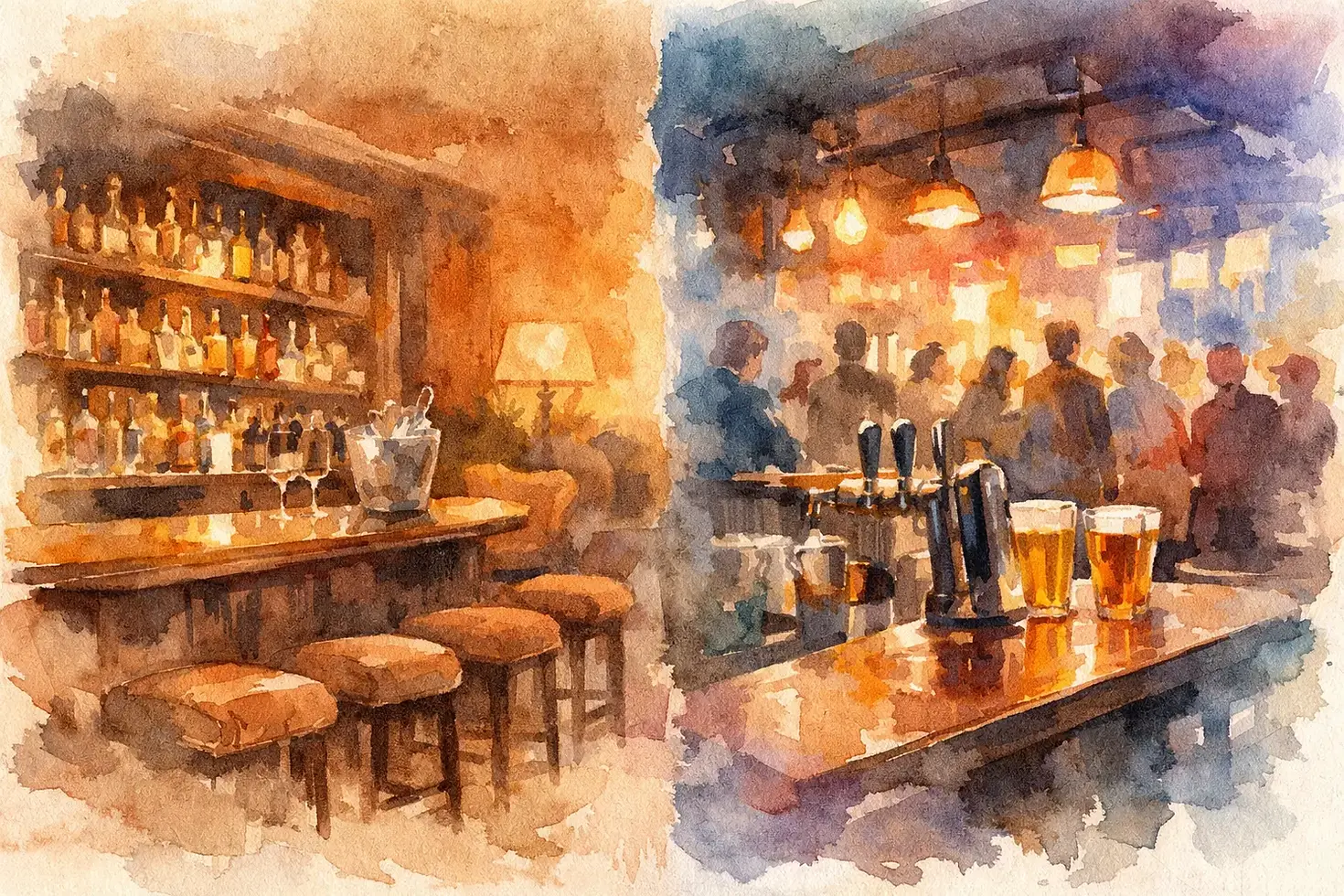
Private Bar Versus Public Bar: Which Fits?
- CK LL
- Jun 26
- 6 min read

You can tell what kind of night you want by one small detail: whether you hope the bartender remembers your name, or whether you hope to disappear into the room. That is often the real question behind private bar versus public bar. It is less about status and more about mood, pace, and how closely you want the evening shaped around you.
A public bar offers energy on arrival. You step into a space already in motion - music, movement, a visible bar top, the easy permission to walk in without much planning. A private bar shifts the emphasis. It asks for intention. You reserve, you arrive with purpose, and the experience tends to begin before the first drink is poured.
Neither format is automatically better. They simply serve different appetites.
Private bar versus public bar at a glance
The cleanest distinction is access. A public bar is open to the general public, often built around walk-ins, volume, and a broader range of guest expectations. A private bar is controlled by reservation, invitation, membership, or some other form of limited entry. That changes everything downstream, from noise level to conversation to how much a bartender can tailor a drink.
In a public setting, hospitality has to stretch. Staff may be excellent, even deeply knowledgeable, but they are managing the room as much as serving the individual. In a private setting, hospitality can narrow its focus. The host has more room to notice preferences, adjust pacing, and create a stronger sense of occasion.
That narrower focus can feel luxurious, but it also comes with trade-offs. A private bar may have fewer seats, less spontaneity, and a more deliberate structure to the night. If you want to meet new people, drift in unannounced, or enjoy the easy theater of a busy room, a public bar often does that better.
Atmosphere is the first real difference
Most people think they are choosing between exclusivity and accessibility. More often, they are choosing between different kinds of atmosphere.
A public bar is social by design. Even when it is polished and serious about cocktails, the room usually carries a shared current. Glassware lands, orders move fast, strangers overlap in conversation, and the bar itself becomes part of the entertainment. For some nights, that is exactly right. You want the city around you. You want energy that asks nothing of you except that you show up.
A private bar tends to feel more contained. That can mean quieter music, fewer visual distractions, softer transitions between drinks, and more attention paid to how the evening unfolds. Instead of competing with the room, you can hear the person across from you. Instead of signaling for service, you are often being guided through it.
For a date, a small celebration, or a night when conversation matters as much as the drink, that difference is not minor. It changes what the evening becomes.
Service: broad efficiency versus personal attention
This is where private bar versus public bar becomes especially clear.
At a strong public bar, good service means precision under pressure. Drinks arrive well-made and on time. Recommendations are concise. Bartenders read the room quickly because they have to. There is craft in that, and it deserves respect. Running a public bar well is not simple.
But public service usually has limits. If the bar is three-deep on a Friday night, even the best bartender cannot spend ten minutes unpacking your flavor preferences, adjusting the build of your drink, and pacing your next round based on how your table is feeling.
A private bar is built for exactly that kind of attention. If the host knows you lean spirit-forward, dislike aggressive sweetness, or want something with texture but no citrus edge, the drink can be shaped around those details. Off-menu service becomes more natural because the format allows for listening.
That is not just customization for its own sake. It can make the difference between being served a good cocktail and being served your cocktail.
Privacy changes behavior
People drink differently when they feel observed. They also talk differently.
A public bar comes with a degree of performance, even in relaxed spaces. You are in a shared environment with a rotating cast of strangers. That can be fun. It can also keep everyone a little more guarded, a little more animated, a little less settled.
Private bars remove much of that pressure. The room feels held. Guests tend to slow down, not because anyone tells them to, but because the environment invites it. You notice aroma more clearly. You ask more questions. You stay longer over a single drink. The experience becomes less transactional and more conversational.
For some guests, that privacy is the point. They are not looking for a scene. They want a setting that feels intimate without being stiff, polished without being theatrical. In a home-based private bar, especially, hospitality can feel closer to being welcomed in than being processed through service.
Price and value are not the same thing
A public bar may look like the more affordable option, and sometimes it is. It benefits from scale. There may be happy hour pricing, larger menus, and a wider range of options at different price points.
A private bar often carries a higher per-guest cost, whether through minimum spend, reservation structure, or simply the economics of a small-format experience. But value is not just what appears on the check. It includes the amount of attention you receive, the rarity of the setting, the quality of the pacing, and whether the evening feels generic or distinct.
If your goal is two quick drinks before dinner, a private bar may be excessive. If your goal is to make the drinks themselves part of the occasion, the math changes.
That is why guests sometimes misunderstand premium hospitality. They compare unit price instead of overall experience. A carefully paced evening with tailored cocktails, real host interaction, and a quiet sense of place is not trying to compete with volume-based nightlife. It belongs to a different category.
Which setting is better for cocktails?
It depends on what you mean by better.
Public bars often excel at range and consistency. A serious cocktail bar with a strong team can produce classics at speed and maintain a menu that serves many kinds of drinkers. If you want a reliable martini before a show or a round of familiar favorites with friends, a public bar can do that beautifully.
Private bars tend to excel at depth. There is more room for dialogue, more room for off-menu exploration, and more room for the kind of small adjustments that turn a drink from technically correct to personally satisfying. The host can notice whether you are sipping slowly, whether your palate is warming up, whether the second drink should contrast the first or extend it.
That kind of sequencing matters. Cocktails should not always arrive as isolated decisions. In the right hands, they can be part of a progression.
Occasion matters more than preference
Some people assume they are either private-bar people or public-bar people. Most are both, depending on the night.
A public bar works well when spontaneity is part of the pleasure. After-work drinks, pre-dinner rounds, casual group catch-ups, solo stops, and nights where you want a room with movement all sit naturally there. The public format is forgiving. It lets you keep plans loose.
A private bar suits evenings that benefit from intention. Dates, anniversaries, small birthday gatherings, meaningful conversations, and nights when you want to taste with attention rather than drink around distraction often feel better in a more controlled setting. The reservation itself becomes part of the ritual.
There is also a practical point. Larger groups that want maximum flexibility may find a public bar easier. Very small groups, especially two to four people, often feel the difference in a private setting more acutely because intimacy scales well.
Private bar versus public bar for the guest who cares about experience
If you care deeply about cocktails, the question is not just where the drinks are good. It is where your attention is most available.
In a public bar, part of the pleasure is external. The room contributes. You absorb the hum of it, the speed, the social texture. In a private bar, the pleasure often becomes more internal. You notice ingredients, service cues, and the emotional shape of the evening. One is expansive. The other is concentrated.
That is why private bars often leave a stronger memory, even when the public bar was excellent. Memory attaches to specificity. A drink made around your preferences, served in a setting that felt discreet and intentional, tends to stay with you longer than a very good drink consumed in a crowded blur.
For guests who value hospitality as much as the cocktail itself, that distinction matters. A thoughtful host can change the entire register of the night.
There is room for both formats, and a good drinking life probably includes both. But if you have been feeling less interested in noise, less drawn to crowded rooms, and more curious about what happens when service becomes truly personal, it may be time to try the quieter side of the question. Sometimes the best bar for the night is the one that leaves enough space for the drink, the conversation, and the company to fully arrive.


Comments