

Are Hidden Bars Worth Visiting? What Matters

A discreet door, a reservation name, a room that feels removed from the street outside: the appeal is easy to understand. But are hidden bars worth visiting once the novelty of finding them has worn off? The honest answer is that it depends on what is waiting on the other side.
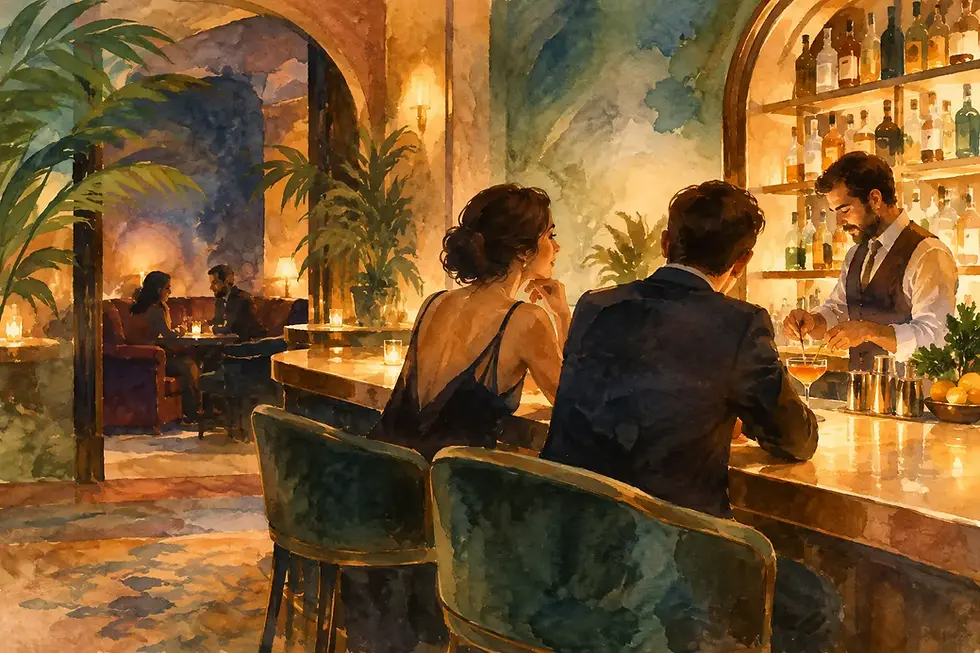
A hidden bar can offer something increasingly rare in city life: permission to slow down. Done well, it is not a scavenger hunt with expensive drinks at the end. It is a setting designed around attention - to the glass, to the people at the table, and to the conversation between guest and bartender.
Are Hidden Bars Worth Visiting for the Experience?
The best concealed bars use privacy as a beginning, not the entire proposition. No sign outside and a door that is easy to miss can create a pleasant sense of anticipation. Yet secrecy alone does not make a night memorable. If the cocktails are rushed, the room is crowded, or the staff recite the same speech to every guest, the hidden entrance becomes little more than theater.
What makes the experience worthwhile is intentionality. A smaller room allows a bartender to notice whether a guest is lingering over a stirred drink or looking for something lighter next. It makes room for a proper recommendation, a small adjustment to a classic, or an off-menu pour that suits the moment. In a thoughtful bar, hospitality does not feel scripted. It feels observed.
This is especially valuable for people who enjoy cocktails but do not want to turn an evening into a lecture. You may know exactly what you like, or you may only know that gin often feels too sharp and whiskey sometimes feels too heavy. A good host can work with either answer. The goal is not to prove expertise across the bar. It is to make a drink that feels right in your hand.
Hidden bars also change the pace of a gathering. They are usually better suited to a date, a close catch-up, or a small group than a large celebration that needs constant movement and noise. There is nowhere to disappear into the crowd, which can be a pleasure when the company is good and an awkwardness when it is not. The setting asks guests to be present.
The Mystery Is Not the Main Event
There is a difference between a bar that is discreet and one that is needlessly difficult. A reservation-only policy can protect the atmosphere, manage a small team’s capacity, and ensure that every table receives care. Clear directions after booking are considerate. Vague instructions, unreliable communication, or a location that leaves guests stranded are not part of the charm.
The same principle applies to pricing. Hidden bars often cost more than a casual neighborhood bar, and that can be entirely fair. Small-batch ingredients, careful ice, precise technique, limited seats, and time spent understanding a guest all carry a cost. But premium pricing should be reflected in the whole evening, not just an ornate garnish or a dramatic entrance.
A worthwhile visit feels generous in ways that are not always obvious. Water appears before it is requested. A bartender remembers that one person prefers a drier finish. The music leaves space for conversation. The final drink is not pushed simply because the clock suggests another round. These details turn exclusivity into hospitality rather than exclusion.
What to Look For Before You Reserve
You do not need a detailed cocktail education to choose well. Start by considering the kind of evening you want. If you want a lively room, spontaneous bar-hopping, and a low-commitment first drink, a hidden bar may not be the best fit. Reservation times and intimate seating can feel restrictive when your plans are deliberately loose.
If you want an evening with a little more focus, look for signs that the bar has a clear point of view. That might be an emphasis on classic cocktails, regional flavors, a tightly considered spirit selection, or a host-led experience. A good bar does not need an enormous menu. In fact, a shorter menu often suggests that each drink has been tested, tasted, and given a reason to remain.
Pay attention to how the venue describes its service. Language around personalization, conversation, and reservations can indicate a place that values the guest as an individual. On the other hand, if every detail centers on being difficult to find, photogenic, or exclusive, approach with modest expectations. A concealed entrance should heighten the mood, not carry it.
It is also sensible to consider practicalities before the night begins. Ask about dietary needs, nonalcoholic options, dress expectations, group-size limits, and timing. A considerate bar will answer directly. There is no loss of romance in knowing whether your friend who does not drink can still enjoy the evening, or whether a late arrival will disrupt a carefully paced seating.
Craft Is More Than a Complicated Drink
Some of the most satisfying cocktails are simple in appearance. A Martini with the right balance and temperature, an Old Fashioned that does not drown the base spirit, or a Daiquiri with real tension between citrus and sugar can reveal more skill than a drink crowded with twelve ingredients.
At the same time, reinvention has its place. A thoughtful bartender may use familiar flavors as a bridge: a savory note in a tropical drink, tea in a whiskey cocktail, or a spice that recalls a family kitchen without overwhelming the glass. The question is not whether a drink is classic or original. It is whether the choices within it make sense.
At Bar59, that sensibility is central to the evening. The experience takes place in a home setting, where drinks can begin with a guest’s preferences rather than a fixed order. The effect is less like entering a secret club and more like being welcomed into a refined living room by someone who has given real thought to what you might enjoy.
When a Hidden Bar May Not Be Worth It
There are nights when convenience matters more than ceremony. Perhaps you have an hour before dinner, a group of eight with varied budgets, or a visitor who wants to see the city rather than settle into one room. In those cases, a familiar neighborhood bar may offer exactly what you need: a good drink without the planning.
A hidden bar can also disappoint if expectations are too high. Social media has trained us to treat discovery as proof of quality. It is not. A dramatic password, a concealed staircase, or a menu delivered in a locked box can be amusing, but none of it guarantees warmth, technique, or good judgment. The more elaborate the performance, the more important it is that the bar remembers why guests came: to feel well looked after.
Cost is another real consideration. If the experience leaves you calculating every order, it may be harder to relax into it. The right splurge should feel proportionate to the occasion. Choose it for an anniversary, a meaningful catch-up, a thoughtful date, or simple curiosity about good drinks. You do not need a special occasion, but it helps to arrive wanting the kind of evening the room was built to offer.
A Better Way to Visit
Treat the reservation as a small invitation, not a test you need to pass. Arrive on time, be open about what you enjoy, and give the bartender useful language. Say that you like bright, herbal drinks but dislike sugary finishes. Mention that you want one classic before trying something unfamiliar. Share allergies plainly. These are not demands. They are the beginnings of a better conversation.
Then leave some room for surprise. The pleasure of a hidden bar is often found in a drink you would not have ordered from a standard menu, or in an hour that passes without anyone reaching for the next venue. The room may be difficult to find, but the experience should never make you feel lost.


Comments